

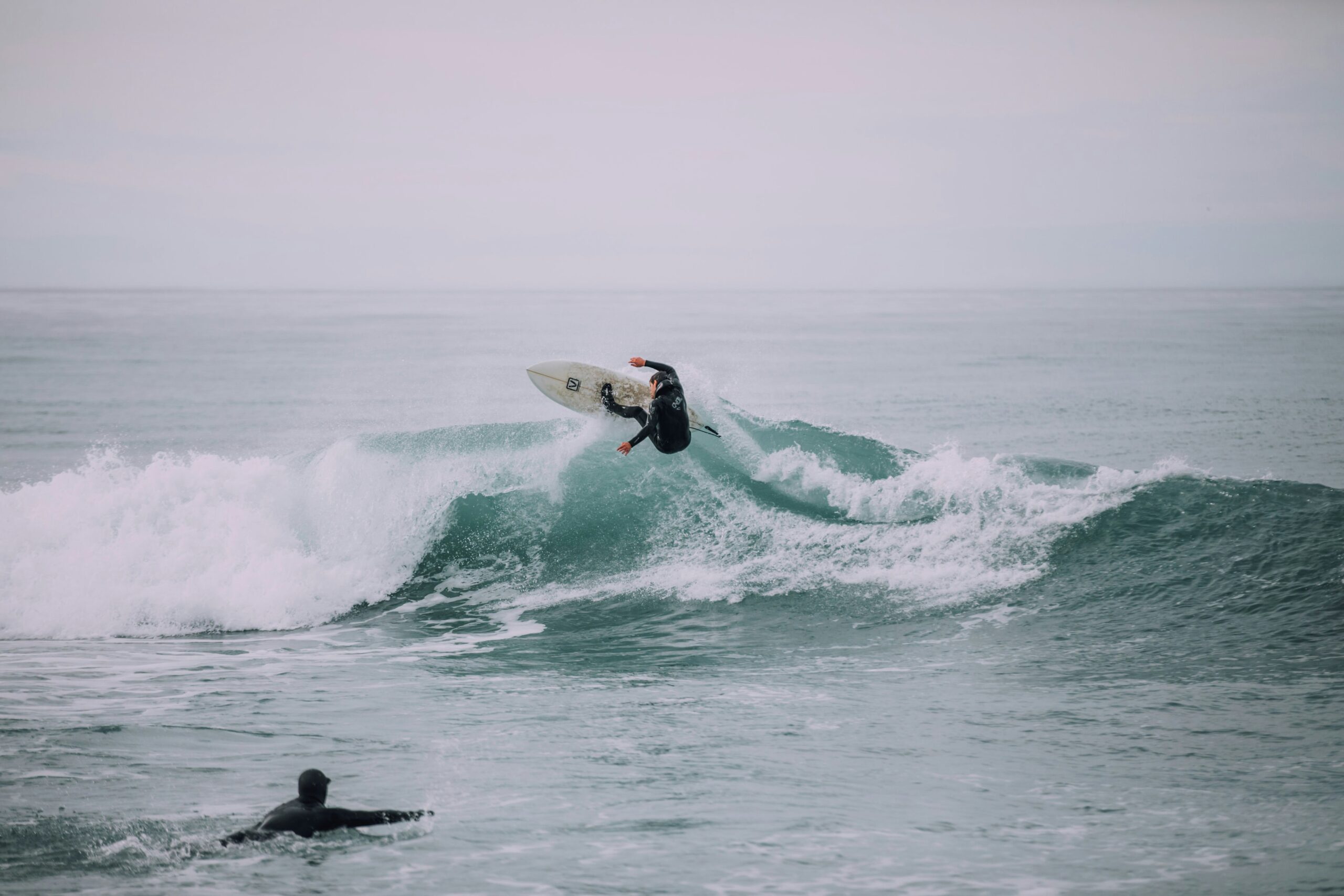
Goa is rapidly emerging as one of South Asia’s most captivating, accessible surf hubs. After decades of celebrating North Goa for its golden sands, slow afternoons, and vibrant nightlife – the focus is now shifting to its rapidly growing surfing community.
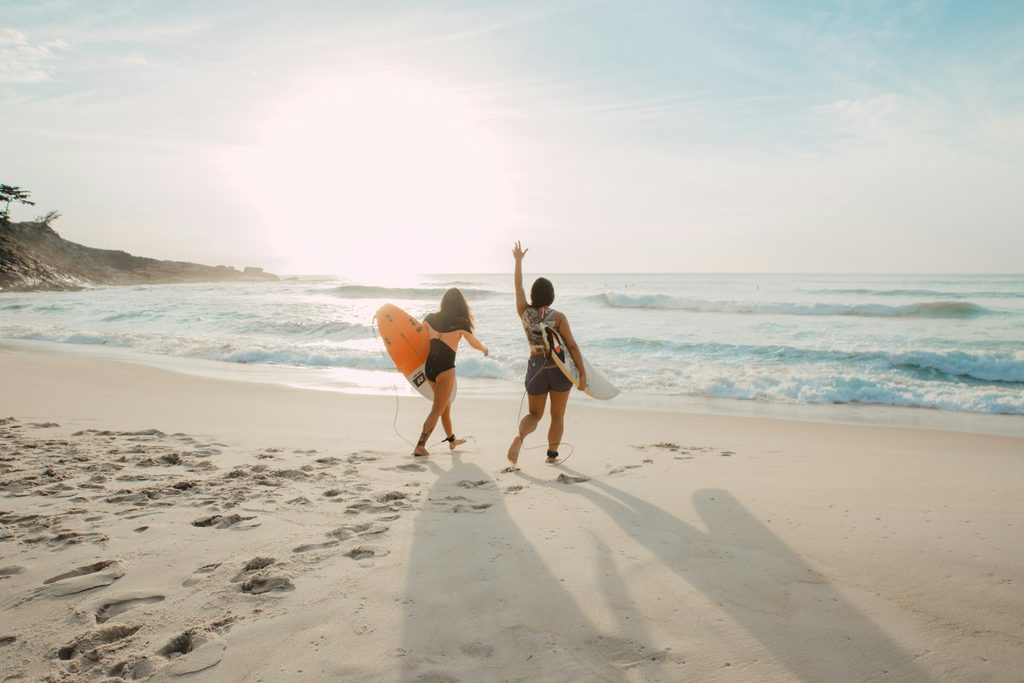
Spanning roughly 100 kilometers of West and South West facing Arabian Sea coastline, Goa offers an ocean terrain defined by warm, welcoming waters. With ocean temperatures hovering between 26°C and 29°C year-round, surfers can trade heavy neoprene wetsuits for simple UV rash guards and light board shorts.
It is an environment where longboarders, beginners, and seasoned watermen alike find an effortless rhythm.
As a new wave of global travelers and high-net-worth individuals shift toward wellness-centric, slow coastal living, Goa’s surf culture has become central to the luxury lifestyle.
The modern high-life in Goa is no longer just about oceanfront parties – it is defined by tracking swell patterns and living in balance with nature.
This lifestyle is best experienced through a distinct contrast: catching early morning waves on the coast, then returning home to a private, green retreat. Tucked away in the serene villages of Siolim and Marna – just a 10 to 15-minute scenic drive from the prime surf breaks of Ashwem and Morjim – Vilāsa provides an idyllic sanctuary that grounds the coastal high life in peace and privacy.
When to Catch the Swell: Seasons, Weather & Tides
Surfing in Goa is dictated by the monsoonal weather patterns of the Indian Ocean. Understanding these distinct seasonal windows is essential for planning the ideal session.
| Season | Wave Characteristics | Surfer Skill Level |
| Oct – Nov (Post-Monsoon Sweet Spot) | 2–5 ft clean A-frame peaks, consistent residual swell. [27°C – 28°C] | Intermediate & Progressing Surfers |
| Dec – Mar (Dry / Peak Season) | 1–3 ft gentle rolling sandbar waves. [26°C – 27°C] | Absolute Beginners & Longboarders |
| Apr – May (Pre-Monsoon Build) | 3–6 ft building swell, afternoon onshore winds. [28°C – 29°C] | Fitness & Thrill Seekers |
| Jun – Sep (Monsoon Off-Season) | 6–10+ ft heavy, dangerous beach breaks. [25°C – 26°C] | Tow-in / Advanced (Schools closed) |
The Golden Window: Daily Tides & Wind Dynamics
In Goa, wind determines wave quality even more than swell size.
- Dawn Patrol (6:00 AM – 8:30 AM): The ocean is at its calmest during early morning. Land breezes keep the sea surface smooth and glassy, carving out clean wave faces.
- Mid-Day Thermal Drift (11:00 AM – 3:00 PM): As the land heats up, onshore sea breezes pick up, causing offshore surface chop and making paddling more demanding.
- Tide Rules: Most Goan beach breaks perform best on a rising mid-tide. Low tide can cause waves to dump quickly onto shallow sandbars, while high tide can cause waves to back-off and lose power near the shoreline.
The Definitive Map of Goa Surf Spots: North vs. South
Goa’s wave profile is dominated by soft, forgiving sandbar beach breaks. Below is the breakdown of the coast’s key surf breaks.

North Goa: The Heart of the Surf Scene
1. Ashwem Beach
- Skill Level: All levels (Exceptional for Longboarders)
- Wave Type: Soft, rolling sandbar peaks
- Best Tide: Mid-tide
- The Experience: Ashwem is widely considered the crown jewel of longboarding in India. The sandbars here extend far out, allowing waves to roll slowly over long distances. It is the perfect venue for practicing cross-stepping, nose-riding, and refined style, complemented by chic beachside dining nearby.
2. Morjim Beach
- Skill Level: Beginner
- Wave Type: Sheltered river mouth & beach break
- Best Tide: Low-to-mid tide
- The Experience: Located where the Chapora River meets the Arabian Sea, Morjim offers gentle, waist-high waves shielded from heavy open-ocean swells. The soft sand bottom makes it one of the safest places for first-time surfers.
3. Mandrem Beach
- Skill Level: Beginner to Intermediate
- Wave Type: Open beach break with multiple sandbars
- Best Tide: Mid-tide
- The Experience: Mandrem offers a quieter alternative to neighboring beaches. Its spread-out sandbars mean fewer surfers in the lineup, giving you space to catch clean waves without distraction.
4. Arambol Beach
- Skill Level: Intermediate
- Wave Type: Punchy sandbar lefts and rights
- Best Tide: Low-to-mid tide
- The Experience: Arambol’s unique beach topography forms a diamond-shaped sandbar that creates faster, punchier waves than the beaches further south. It’s ideal for surfers looking to build speed and generate turn power.
South Goa: Mellow, Picturesque Bays
1. Agonda Beach
- Skill Level: Intermediate
- Wave Type: Steeper beach break
- Best Tide: Mid-tide
- The Experience: Agonda features a steeper shoreline, producing faster waves with a stronger shore break. It’s a great option for intermediate surfers looking for a fun session away from the North Goa lineups.
2. Palolem Beach
- Skill Level: Absolute Beginner
- Wave Type: Highly sheltered bay break
- Best Tide: High tide
- The Experience: Palolem is framed by dramatic headlands that block most ocean swells. While rarely big enough for advanced surfing, its calm, shallow waters provide a controlled environment for introductory lessons.
Premier Surf Schools & ISA-Certified Academies
Learning to surf safely requires proper instruction, quality equipment, and professional guidance. Goa hosts several surf academies led by International Surfing Association (ISA) certified coaches.
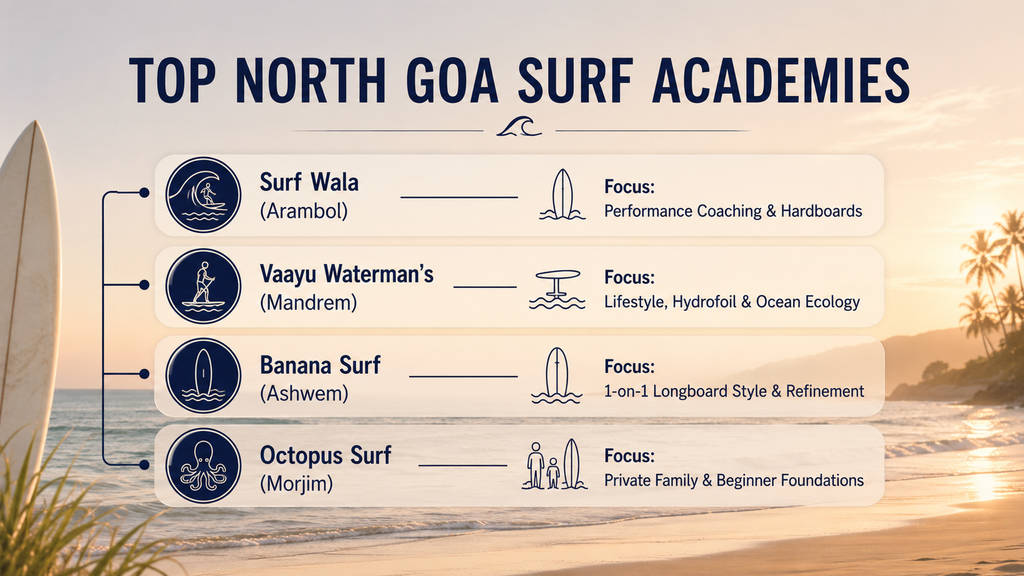
1. Surf Wala (Arambol)
- Specialty: Advanced progression and high-performance instruction.
- Overview: Manned by international ISA coaches, Surf Wala offers structured progression programs. They maintain a solid fleet of hardboards (epoxy and fiberglass) for surfers transitioning away from soft-tops.
2. Vaayu Waterman’s Village (Mandrem)
- Specialty: Holistic ocean sports and hydrofoil culture.
- Overview: Vaayu is a long-standing hub for water sports in North Goa. Beyond traditional surfing, they offer eco-conscious coaching, wing-foiling, and stand-up paddleboarding, backed by deep local knowledge of coastal dynamics.
3. Banana Surf School (Ashwem)
- Specialty: 1-on-1 longboard coaching and style refinement.
- Overview: Located on Ashwem’s soft sands, Banana Surf School focuses on personalized coaching. Their instructors use video analysis to help students refine their stance, paddling technique, and wave-reading skills.
4. Octopus Surf School (Morjim)
- Specialty: Family-friendly, private beginner lessons.
- Overview: Situated on Morjim’s calm shores, Octopus focuses on ocean safety, water confidence, and fun, accessible lessons for families and beginners.
Global Perspective: How Goa Compares to Bali, Sri Lanka & Portugal
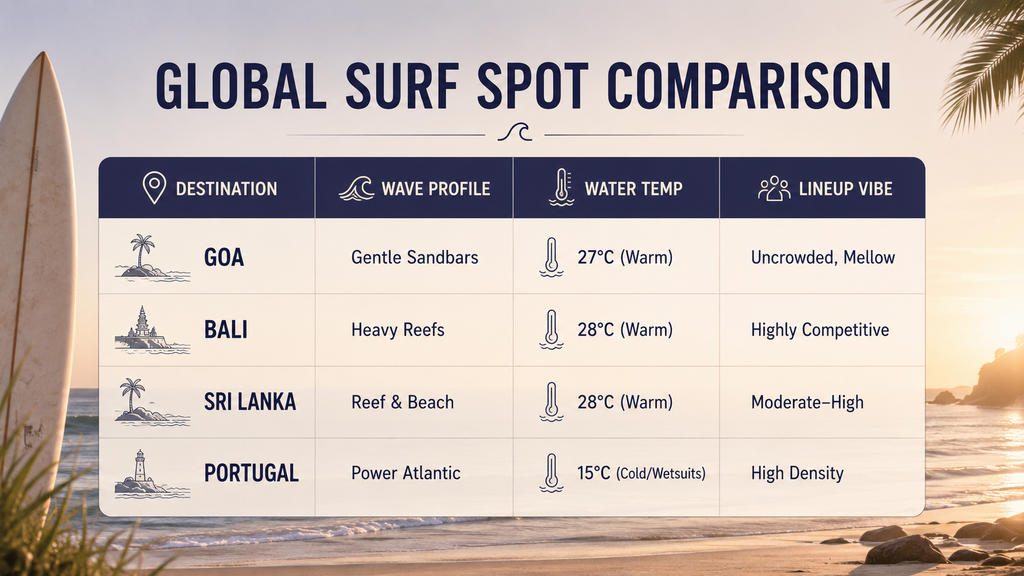
To understand Goa’s appeal, it helps to compare its coastline with other well-known surf destinations around the world.
Bali (Canggu & Uluwatu) vs. Goa
- The Waves: Bali features powerful, shallow reef breaks and heavy barrels. Goa offers soft, sandy-bottom beach breaks.
- The Lineup: Bali’s lineups can be crowded and competitive. Goa provides a far more relaxed, beginner-friendly atmosphere without the intensity of shallow reef drops.
Sri Lanka (Ahangama & Weligama) vs. Goa
- The Waves: Both regions offer warm water and mellow beach breaks. Sri Lanka has more consistent reef points, whereas Goa offers wider, uncrowded sandbars.
- The Lifestyle: While Sri Lanka is a classic surf trail destination, Goa pairs its surf culture with fine dining, heritage architecture, and upscale residential retreats.
Portugal (Ericeira & Peniche) vs. Goa
- The Waves: Portugal delivers world-class Atlantic swells, but cold water makes thick wetsuits mandatory year-round.
- The Experience: Goa offers a tropical 28°C ocean bath, allowing you to surf comfortably in lightweight swimwear under warm sun.
Surf Etiquette, Gear & Ocean Safety
Respecting the ocean and fellow surfers ensures every session stays safe and enjoyable.
Essential Gear Checklist
- Lycra UPF 50+ Rash Guard: Essential protection against intense tropical UV rays and board rash.
- Reef-Safe Mineral Sunscreen: Zinc-based sunblock that stays on in saltwater without harming marine ecosystems.
- Soft-Top Board (Beginners) / Epoxy Fish or Log (Intermediates): High-buoyancy boards make catching smaller, rolling waves easier.
Lineup Rules & Ocean Safety
- Right of Way: The surfer closest to the peak (where the wave breaks first) has priority. Never drop in on someone already riding down the line.
- Hold Your Board: When paddling through incoming waves, hold onto your board firmly. Throwing your board backward can endanger surfers behind you.
- Respect Marine Sanctuaries: Beaches like Morjim and Mandrem serve as nesting grounds for protected Olive Ridley sea turtles. Avoid night lighting and follow local beach guidelines.
- Navigating Rip Currents: If caught in a channel current, remain calm. Do not paddle against the current toward the beach; instead, paddle parallel to the shore until you clear the pull, then ride the waves back in.
The Maximalist Lifestyle: Elevating Coastal Living with Vilāsa
Surfing in North Goa offers a rare rhythm: waking with the sun, paddling out into glassy warm waters, and starting the day attuned to the ocean’s tides. Yet, the true luxury of this lifestyle lies in where you land after the morning session finishes.
While the beach belt brings energy and excitement, long-term comfort often demands a quieter setting. Living directly on the busy coastal strip can mean constant tourist traffic, humidity, and lack of privacy.
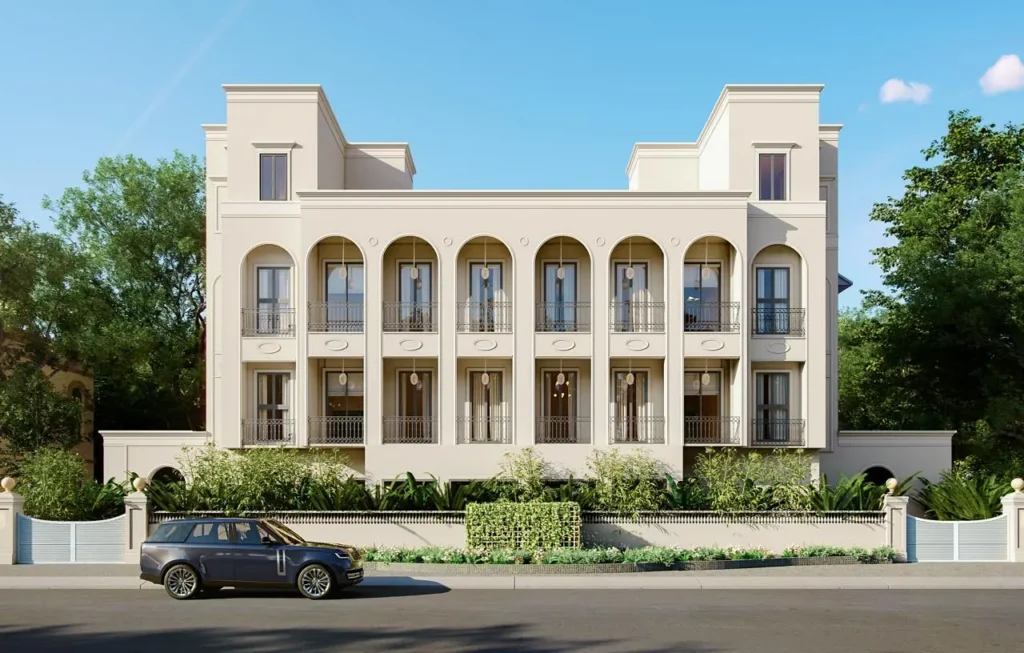
This is where the villages of Siolim and Marna shine. A short 10 to 15 minute drive inland from the coastal stretch of Morjim and Ashwem, these green neighborhoods offer a peaceful countryside environment. Nestled among ancient banyan trees, palm groves, and winding tidal estuaries, Siolim and Marna represent the tranquil side of North Goa.
Here, Vilāsa creates maximalist residences designed as private sanctuaries. After a morning spent in the surf, you return home through winding, tree-lined lanes to an architectural haven designed for rest and renewal.
Architectural Sanctuaries Built for Recovery & Balance
Vilāsa homes are crafted to bridge bold architecture with personal wellness:
- Private Spa Facilities: Essential after a long morning session, private spa areas offer a dedicated space for muscle recovery and deep relaxation.
- Private Gym Facilities: Specialized private fitness spaces allow you to focus on core stability, rotational strength, and cardiovascular conditioning—building the physical foundation needed for dynamic surfing.
- Lush Village Surroundings: Living amidst the quiet green canopy of Marna and Siolim offers cool breezes and total privacy, creating a peaceful sanctuary away from the busy beach crowds.
By pairing the spirit of North Goa’s surf beaches with the quiet luxury of an inland village home, Vilāsa offers the ultimate Goan lifestyle: active mornings on the ocean, followed by peaceful afternoons in your own private estate.
Frequently Asked Questions
Yes. Goa is one of Asia’s most accommodating beginner surf locations. Beaches like Ashwem, Mandrem, and Morjim feature soft, sandy bottoms, shallow waist-deep water, and gentle rolling waves taught by certified ISA instructors.
No. Water temperatures remain warm year-round, between 26°C and 29°C. A quality UPF 50+ rash guard paired with standard board shorts or swimwear is all you need to stay comfortable and protected from the sun.
October and November offer the best conditions, with clean A-frame waves and residual post-monsoon swells. December through March brings smaller, gentler waves that are ideal for longboarders and first-time surfers.
The surf beaches of Morjim, Ashwem, and Mandrem are a scenic 10 to 15-minute drive from Siolim and Marna. This convenient proximity makes it easy to enjoy quick morning surf sessions before returning home to the quiet comfort of your village estate.